“Education is the most powerful weapon which you can use to change the world.”


'' L'éducation est l'arme la plus puissante pour changer le monde.''
― Nelson Mandela

Thursday, 1 November 2012

Fun link for review!


Here is a super game to review a lot of stuff. Just follow the instructions and have fun! You have to spin the wheel of fortune and you will get questions on different categories.


http://www.eslgamesworld.com/Revision/Level1/play.html

Try it! It's a cool way to study...

Week of November 2012


November 5th, 2012

Grade 1: With the little ones, we are currently studying colours, numbers 0- 10 and objects in the classroom. I evaluate their general understanding based on their response process in class throughout the different activities.

- Couleurs, chiffres 1 à 10, quelques objets de la classe ( surtout ceux qu'ils utilisent souvent).
Cette semaine j'évalue leur compréhension globale en observant leur réponse aux diverses situations d'apprentissage. ( Compétence 1)

Grade2: In grade two, we are currently studying the months of the year, the seasons and the days of the week. As we do in grade 1, I will evaluate their progress by observing their response process in class.


- Les mois de l'année, les saisons et les jours de la semaine. En ce moment, j'évalue les élèves par l'observation de leur réponse aux diverses situations d'apprentissages en classe. ( compétence 1)


Grade 3: We are learning the vocabulary related to the classroom. We also  work on all the classroom expressions used to communicate with partners when working in teams. We also learnt a few reading strategies.
I'm evaluating the degree of comprehension  and ability to reinvest what was learnt through different tasks.

- Expressions et vocabulaire liés à la salle de classe et aux situations de travail en équipe. Nous travaillons les stratégies de lecture. Cette semaine, j'obsreve les élèves afin d'évaluer leur degré général de compréhension et leur capacité à réinvestir ce qui a été enseigné.

Grade 4: We are working on the unit `` My class, my orchestra''. In this unit, the students learn the vocabulary related to musical instruments, but also the prepositions of places and expressions linked to the work in class.

- Nous sommes dans l'unité un du livre Tag. Nous y voyons le vocabulaire lié aux instruments de musique, les prépositions de lieux et les expressions utilisées en classe lors de l'exécution de diverses tâches.
 Je suis en train d'évaluer les élèves sur leur compréhension générale et le réinvestissement des notions enseignées. Comme il s'agit d'observer les enfants au cours d'échanges à l'oral, il n'y a rien à étudier pour cela. Il suffit d'utiliser l'anglais qu'ils connaissent pour communiquer au cours de diverses situations.


Grade 5: We are currently talking about pastimes. Last week, we learnt the present continuous and we are going to continue practicing this week. Also we are going to do more communication exercises to give me opportunities to hear the students in English and evaluate their oral communication skills.

- Activités préférées, présent continue ( verbe to be et verbe en ing). Activités de communication orale qui me permettront d'évaluer les compétences de communication des élèves.


 Grade 6: In grade 6, we started unit 1 in Spirals and we received the addresses of our penpals. The project is a GO! We are going to write our first letters and work on writing competencies while doing that. I will observe students. in class while they are working to evaluate their oral communication skills.

- Nous sommes actuellement dans l'unité 1 du cahier Spirals. Nous lançons officiellement notre projet de correspondance. Les adresses de nos élèves jumelés sont arrivées et nous travaillerons les situations d'écriture en produisant notre première lettre. J'évaluerai les élèves sur leurs compétences de communication orale lors de l'exécution des travaux en classe. 


A word to all: Report cards are coming up. Speak English in class!

Un mot à tous: Les bulletins arrivent à grands pas. Exprimez-vous en anglais en classe!


Tuesday, 30 October 2012

London


Transportation:  It is very easy to get around the city which is famous for its red buses, black taxis and subway ( metro). Whatever you choose, it is easy and very accessible.

Food and drinks:  London has more than 6000 restaurants to choose from. It's an all you can eat kind of city. You can join the Londoners for the afternoon tea and scones which are part of a very old English tradition. Enjoy!

Conclusion: It is impossible here to make a complete tour of all there is to know about the city. It is so rich in culture, history and things to do and see. This was just a brief overview. If you want to know more, here is a link to a very complete site on London: http://www.visitlondon.com/discover-london. I sure hope you enjoyed your visit...


London, capital of England


London, England

London is the capital of England. It is a large city with many things to do and see. It was founded by the Romans 2000 years ago. They called it Londinium. Here is a visit of this incredible city. Don't forget to watch the video. Have fun...
London and the Olympics:


Photo gallery: the best of the Opening Ceremony
Olympic Opening ceremonies

London was the host of the 2012 summer Olympic games. Many countries participated but the big winners were the U.S.A with 104 medals, England with 88 medals and China with 65 medals. The ceremonies and the festivities were fabulous. Everyone had a great time.


National Gallery
Touristic sites: London is the political, economic and cultural capital of Britain. It is one of the most visited European cities. You can visit the Queen's official residence at Buckingham Palace and tour the Houses of Parliament, historic home of the UK government. If you are interested in museums, you will find many of them in the city. You can visit the Tate Modern, the National Gallery and the Victoria and Albert Museum.


Historical sites: The Palace of Westminster and Westminster Abbey, the Tower of London, Maritime Greenwich and the Royal Botanic Gardens, Kew, are among the greatest historical sites to visit in London. They are a trace of its long history. Be sure not to miss it.


Westminster Abbye


Royal Gardens, Kew


Tower of London
 Outdoor parks:  If you enjoy a quiet walk in the park, London will enchant you with one of its many outdoor green spaces. Make sure you visit the Royal Parks as well as Hampstead Heath in North London, which offers amazing views over the city.


Green Park
Regent's Park and Primerose hill

Kensington Park


Tuesday, 16 October 2012

About exams and tests...

Here is the opinion of the pros...


This week October 15th...

Here is the program for this week... Don't forget it is a short week so have your studying done on time.

Grade1: We started the unit '' The engine that could'' which will be our project for the next few weeks. We will learn the colours, action verbs and vocabuary on familiar objects.

 I started the evaluations of the students communication skills by observing them in class while they work and interact with me or with peers.


Grade 2: We are currently working on the first unit of the method '' Little rascal''. The title is '' Star bright'' . The students are learning new vocabulary through the story of a little boy who made a wish and regretted seeing his wish come true. 

I started the evaluations of the students communication skills by observing them in class while they work and interact with me or with peers.
 Grade 3: We started to work on unit one in Tag. We are learning vocabulary from the classroom. The students will have to study their vocabulary sheet. They will also learn to work in team in a productive way. Each person will have a task to carry in the team to accomplish the work.
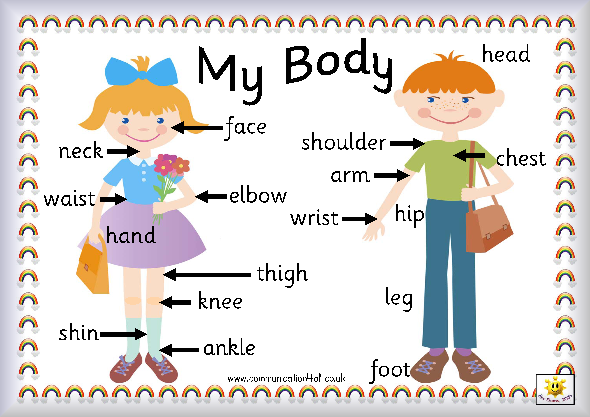
Exam next week on body parts. Make sure to review the vocabulary. 

Grade 4: We started the unit '' My class, my orchestra'' in Tag. In this unit, students will compare their class with an orchestra and learn classroom and musical instruments vocabulary.

Exam next week on telling time, the verb to be, to have and body parts. Don't forget to review!


Grade 5: Exam on pronouns and possessive adjectives. Don't forget to study! Oral evaluation.

Grade 6: Work on the verb to be ( affirmative, Negative and questions). We will compose riddles.

Next week, exam on the verb ''to be''.

Do not forget to participate in English in class because I started the evaluations for the 1st report card. Every time you speak, I listen. Make sure it's in English!  


Tuesday, 9 October 2012

To be or not to be: There is the question.

William Shakespeare ( 1564-1616), the author of those famous words.
The verb to be, the most useful verb in the English language!

You may not know this, but the verb ''to be'' is one of the most important verbs in English. It is also a verb that is very irregular. It means that it doesn't follow the rules like many other verbs do. You have no choice but to learn it by heart. Yes...by heart, but don't worry. You will survive.

To be ( present tense)            

I     am                            

you are                                                         
He   is                                                             
She  is                                                          

It      is                                                         

We   are                                                          
You  are                                                       

They  are                                                   

Negative
I am not      happy.
You are not sad.
He is not      hungry.
She is not     in the park.
It is not        sleepping.
We are not   in class.
You are not  talking.
They are not watching T.V.

Yes /No questions...

To make a Yes/No question with the verb ''to be'', you simply reverse the subject and the verb.

Example: Paul is ten years old.
                Is Paul ten years old? Yes, he is.
                                                   No, he is not ( isn't)

Information questions


Information questions start with a question word.

Example: How old is Paul? Paul is ten years old.